
| Wai'anae Today | |||||
| The People | |||||
| Back to Wai'anae Today Index | Like most Hawai'i communities,
Wai'anae is diverse. The thoughts shared in the
participation are thereforevarious
and typically cover a wide spectrum of ideas.
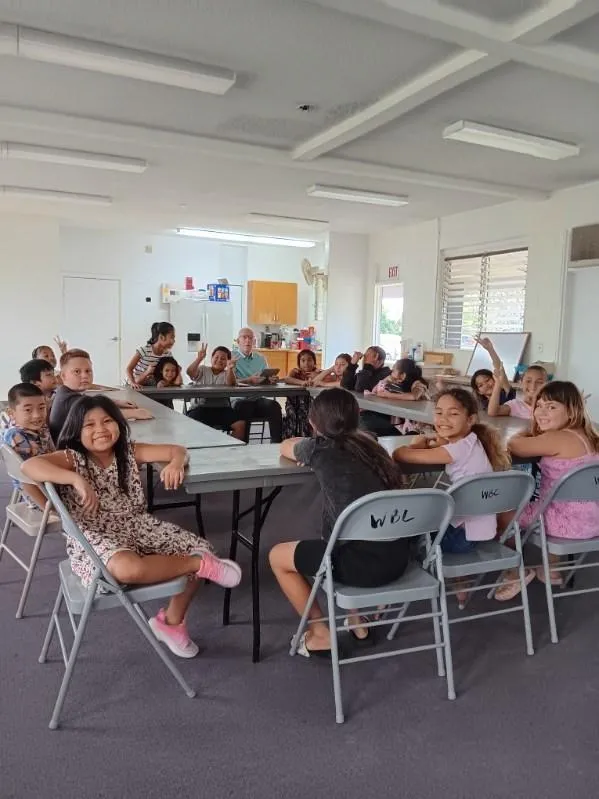
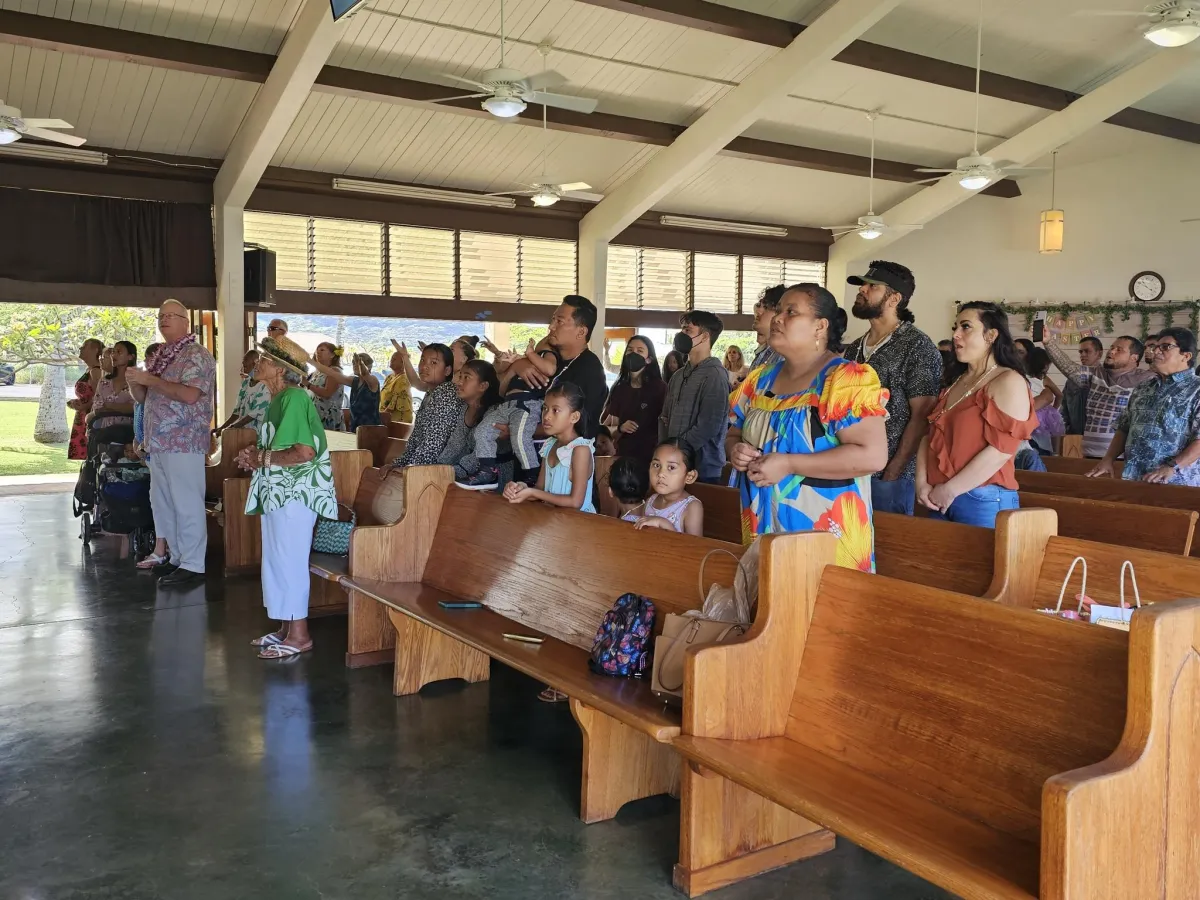
Nevertheless, amidst the differences are certain values held by many in the community regardless of ethnicity, origin, or walk of life. In Wai'anae the community has many relationships that are essential to the Wai'anae identity. People value family relationships, and extended families and close kinship are common. The people's relationships to their diverse cultures are also important, and these associations affect the way people relate to their physical environment. Wai'anae is a place that is geographically and socially far from city life and city conveniences. It is a place where development is relatively low density, where there are still many small farms and agricultural activites. For most people, Wai'anae's rural nature means freedom. In Wai'anae, the predominant features are still natural, with its blue ocean, its white sand beaches, which line the coast, its green valleys and dramatic pu'u, and its mountain range which embraces the entire community. No matter how fast Wai'anae has grown, its is still a community with small town values. It means that many of the residents grew up together and many belong to multigenerational local families. They frequently gather with friends and neighbors. They come together to help each other when there is a need. They fell safe because they can depend upon each other. People in Waianae have great respect for the elderly. The older people are the community's link to the past. The elderly help young people and newcomers understand Wai'anae's culture and history. They teach others what they've learned from previous generations, so that their culture can live on through the children. Since 1950, the population has increased from only 3,000 to more than 40,000 people by the end of 1998. Together with this population growth, there has been tremendous growth in all forms of urban/suburban development, including housing, commercial centers. Industrial uses, schools and other public buildings, roads, and utilities. |
||||
| DEMOGRAPHICS | |||||
| Wai'anae | |||||
| Makaha | |||||
| Makaha Valley | |||||